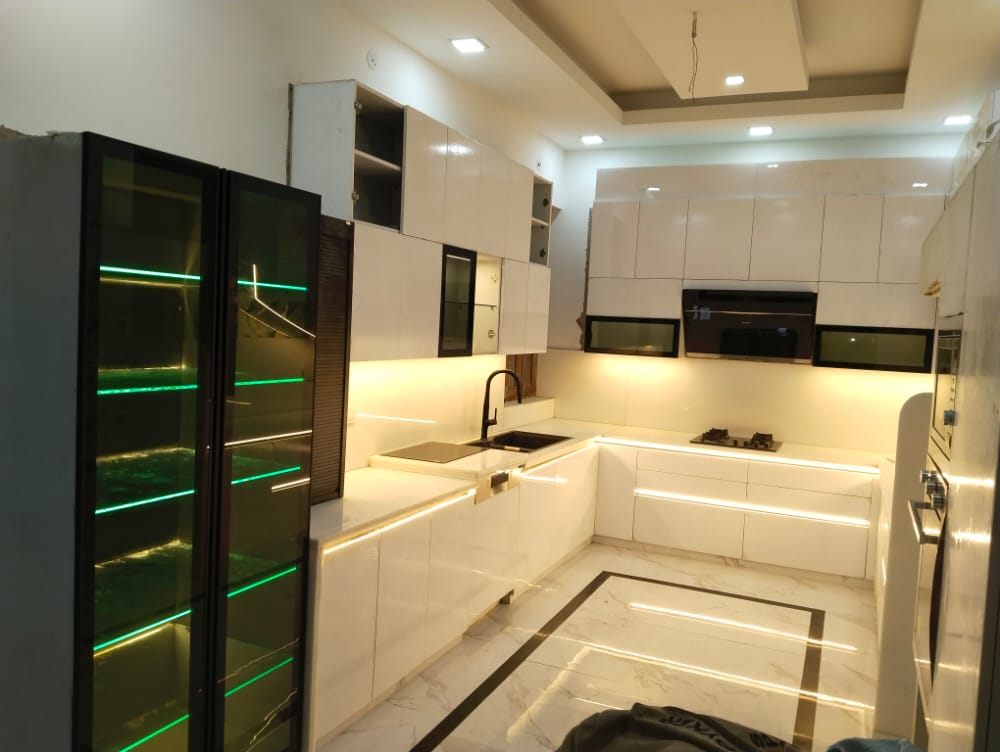
Exploring Materials Used in Modular Kitchen Implementation
When designing a modular kitchen, choosing the right materials is crucial for achieving a balance of functionality, durability, aesthetics, and budget considerations. Modular kitchens typically consist of various components such as cabinets, countertops, backsplashes, and flooring, each requiring different materials to meet specific needs. Let's explore the common materials used in modular kitchen implementation:
1. Cabinet Materials
Cabinets form the backbone of any modular kitchen, providing storage and defining the kitchen's aesthetic. Several materials are commonly used for modular kitchen cabinets:
Wood: Solid wood or engineered wood (plywood, MDF, HDF) is a popular choice due to its durability and classic appeal. It can be finished with veneers, laminates, or paints to suit different styles.
Laminate: Laminate cabinets are cost-effective, easy to clean, and available in a wide range of colors and finishes. They are resistant to moisture and stains, making them suitable for kitchens.
Acrylic: Acrylic cabinets offer a glossy, modern look. They are highly durable, scratch-resistant, and easy to maintain. Acrylic finishes can be customized to achieve various colors and patterns.
PVC: PVC (Polyvinyl Chloride) cabinets are lightweight, moisture-resistant, and durable. They are available in a range of colors and textures, making them suitable for contemporary kitchen designs.
2. Countertop Materials
Countertops not only add to the aesthetic appeal but also serve as functional work surfaces. The choice of material depends on durability, maintenance requirements, and style preferences:
Granite: Granite countertops are prized for their durability, heat resistance, and natural beauty. They are available in various colors and patterns but require periodic sealing to maintain.
Quartz: Engineered quartz countertops offer a durable, non-porous surface that is resistant to scratches, stains, and heat. They are available in a wide range of colors and require minimal maintenance.
Marble: Marble countertops lend a luxurious appeal to kitchens with their unique veining and patterns. While elegant, marble requires regular sealing and can be susceptible to stains and scratches.
Solid Surface: Solid surface countertops (e.g., Corian) are seamless, durable, and easy to clean. They come in various colors and can be repaired if scratched or damaged.
3. Backsplash Materials
Backsplashes protect kitchen walls from splashes and stains while adding a decorative element. Common materials used for backsplashes include:
Tiles: Ceramic, porcelain, or glass tiles are popular choices due to their durability, ease of maintenance, and endless design possibilities. They are available in various colors, sizes, and textures.
Glass: Glass backsplashes create a sleek, modern look and are easy to clean. They can be back-painted to achieve any color desired, adding a reflective quality to the kitchen.
Stainless Steel: Stainless steel backsplashes are durable, heat-resistant, and hygienic. They complement modern kitchen designs and are easy to maintain.
4. Flooring Materials
Kitchen flooring should be durable, easy to clean, and able to withstand high foot traffic and spills. Common materials used for kitchen flooring include:
Ceramic Tile: Ceramic tiles are durable, water-resistant, and available in various colors, patterns, and textures. They are easy to clean but can be cold underfoot.
Porcelain Tile: Porcelain tiles are similar to ceramic but denser and more resistant to moisture and wear. They are suitable for high-traffic areas and come in a range of designs.
Vinyl: Vinyl flooring is cost-effective, comfortable underfoot, and available in a wide range of colors and patterns. It is water-resistant and easy to maintain.
Wood: Hardwood or engineered wood flooring adds warmth and natural beauty to kitchens. It requires regular maintenance and may not be suitable for areas prone to moisture.
Conclusion
Selecting the right materials for your modular kitchen is essential to achieving a functional, durable, and aesthetically pleasing space. Consider factors such as durability, maintenance requirements, style preferences, and budget constraints when choosing materials for cabinets, countertops, backsplashes, and flooring. By carefully selecting materials that suit your needs and lifestyle, you can create a modular kitchen that enhances the overall appeal and functionality of your home.